
Thanksgiving is built around abundance—family, traditions, and of course, food. But abundance doesn’t have to mean overwhelm. With a few intentional choices, you can savor every bite, honor your health goals, and still enjoy your favorite dishes. That’s the heart of mindful eating: paying attention on purpose so you can experience more satisfaction with less stress. This guide will show you how to approach Thanksgiving with both health and enjoyment in mind—no deprivation, no guilt, just presence and pleasure.
Why Mindful Eating Matters on Thanksgiving
Holidays are emotional and sensory. There’s nostalgia in the stuffing, community in the casserole, and love in the pie. Mindful eating helps you tune into those layers—what you’re tasting, how you’re feeling, and what your body needs—so you can make choices that feel good in the moment and afterward. Rather than rigid rules, it’s a set of skills that raise your awareness:
- Noticing hunger and fullness signals before, during, and after the meal.
- Choosing foods that offer both comfort and nourishment.
- Eating at a pace that lets satisfaction catch up to your appetite.
- Letting go of all-or-nothing thinking and food guilt.
The payoff? Less overeating, more enjoyment, and a calmer relationship with holiday food. You’ll likely discover that you can have your favorite dishes while maintaining a sense of balance—because satisfaction, not restriction, is what truly prevents overdoing it.
Before the Big Meal: Set Yourself Up for Success
Mindful eating starts long before the turkey hits the table. A few simple shifts can help you arrive at the meal feeling grounded instead of ravenous.
- Don’t skip breakfast. A protein-rich morning meal (eggs and fruit, Greek yogurt, or oats with nuts) helps stabilize appetite, so you’re less likely to arrive starving and speed-eat appetizers.
- Hydrate. Keep water handy throughout the morning. Dehydration can masquerade as hunger and magnify cravings.
- Move your body. A brisk walk or light workout boosts mood and digestion and can reinforce your self-care mindset.
- Set an intention. Try: “I will savor my favorites and listen to my body.” Keeping a simple intention in mind is more effective than rigid rules.
- Preview the menu. If you can, plan which dishes matter most to you. Prioritize must-haves and consider smaller portions of “nice-to-have” items.
- Bring a supportive dish. If you’re a guest, volunteer a flavorful veggie, salad, or protein-forward side so there’s always a dependable option you love.
At the Table: Practical Mindful Eating Tips
Thanksgiving tables are lively, so keep your approach simple and doable. These strategies help you enjoy the food and the moment.
- Start with a pause. Take one slow breath before serving yourself. This “speed bump” reconnects you with your intention and reduces autopilot eating.
- Build a balanced plate. Aim for a visual split: about half non-starchy veggies (green beans, salad, Brussels sprouts), a quarter protein (turkey), and a quarter starches (stuffing, mashed potatoes, sweet potatoes). A balanced plate supports steady energy while making room for favorites.
- Prioritize your must-haves. Choose the top two or three holiday dishes you look forward to all year and give them prime plate real estate.
- Use the first-three-bites rule. The first few bites deliver the biggest flavor and satisfaction. Eat them slowly, note textures and spices, and let yourself really enjoy them.
- Check in halfway. Pause mid-plate to assess fullness and enjoyment. Ask, “Do I need more of this, or would another taste of something else be satisfying?”
- Eat at conversation pace. Set your fork down between bites, talk, and breathe. Slowing down helps your brain catch up to your stomach.
- Right-size seconds. If you go back for more, take small, intentional tastes of what you loved most rather than a full second plate.
- Make peace with leftovers. Remind yourself the meal isn’t “now or never.” There’s more deliciousness tomorrow, which makes it easier to stop at comfortable fullness today.
None of this is about perfection. It’s about staying curious and flexible. If you overdo it, notice how you feel, offer yourself compassion, and move on—no need for compensation or punishment.
Enjoying Desserts and Drinks Without Guilt
You can absolutely enjoy dessert and still support your health. The key is to anchor sweets and sips in presence and portion awareness.
- Pick what you truly love. If pecan pie is your favorite, make room for it and skip the “meh” cookies.
- Plate it. Even for small slices, use a plate and sit down. Your brain registers the experience, improving satisfaction with less.
- Share or savor small. A half slice or sharing with a partner often hits the spot. Slow bites, big enjoyment.
- Beverage balance. Alternate alcohol with water or seltzer. Choose drinks you actually enjoy and sip them, rather than refilling on autopilot.
Remember: satisfaction is a powerful tool for portion control. When you fully savor dessert, you typically need less to feel content.
Navigating Family, Traditions, and Leftovers
Food is love in many families, and pressure to “have more” can be real. Try gentle boundary-setting with gratitude: “Everything is delicious. I’m comfortably full now, but I’d love leftovers for tomorrow.” This validates the cook’s effort while honoring your body’s cues.
Consider turning traditions into mindful rituals. A quick gratitude round—naming one thing you appreciate about the year—can slow the pace and shift focus from quantity to connection. And embrace the power of leftovers: packaging favorites into tomorrow’s lunch reduces the urgency to keep eating past fullness today.
A Sample Mindful Thanksgiving Plate
Think of this as a template you can tweak based on what you love:
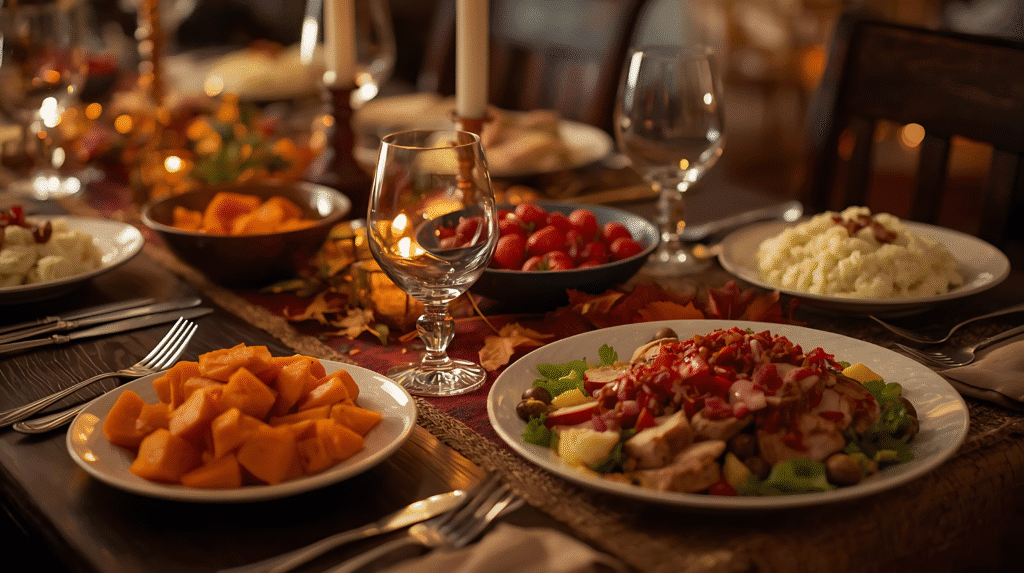
- Half plate of vegetables: roasted Brussels sprouts and garlicky green beans.
- Quarter plate protein: sliced turkey with a spoon of gravy.
- Quarter plate starch: a scoop of stuffing or mashed potatoes (your favorite gets the spot).
- Bonus tastes: a tablespoon of cranberry sauce and a small portion of sweet potato casserole if it’s a must-have.
Eat slowly, pause halfway, and decide if you want a small second taste of your favorite item. Later, enjoy dessert with the same presence—no rushing, no guilt.
Mindful Moments You Can Use All Day
- Breath cue: Three slow breaths before you fill your plate.
- Hunger check: On a 1–10 scale, where are you now? Aim to start eating around 3–4 and stop around 6–7.
- Savor signal: Name two flavors or textures you notice in the first bites.
- Gratitude glance: Before dessert, note one non-food joy from the day.
The Bottom Line
A healthy Thanksgiving isn’t about skipping rolls or earning pie with workouts. It’s about presence, preference, and kindness toward yourself. When you choose a balanced plate, slow down to savor, and listen to your body’s cues, you create space for both nourishment and delight. That’s the promise of mindful holiday eating: more joy, less stress, and a celebration that truly satisfies—during the meal and long after the dishes are done.
Leave a Reply